/ Mar 05, 2026
Trending
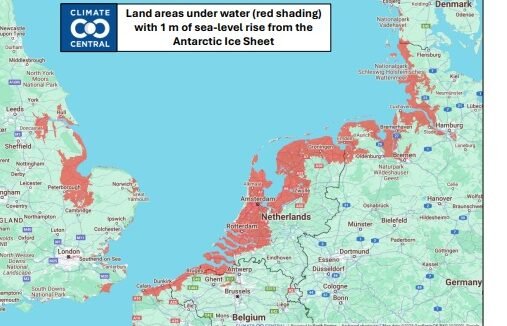
The Netherlands is one of the countries exposed to a global threat of “catastrophic inland migration” due to sea level rise, if global temperatures rise by just 1.5C, according to the authors of a new study.
Prof Chris Stokes, lead author of the study published last week in Nature Communications Earth & Environment journal, told Dutch News that the Netherlands was one of a number of “low-level states” at risk.
The paper examines global mean sea level rise as ice sheets in Greenland and Antarctica melt and – although it does not look specifically at the impact on different regions– he said the issue is urgent.
“There is a really good tool to help people map sea level rise scenarios and I often produce maps…to try and get the urgency across to the public [and] policymakers,” he told Dutch News.
In the event of a sea level rise of one metre, half of the Netherlands would be under water without further measures, according to these scenario maps. Poorer countries such as Bangladesh are even more at risk, another author of the study Prof Jonathan Bamber told The Guardian.
Even though the Dutch have significant measures to combat sea level rise, after two catastrophic floods in living memory, the country is also exposed to flooding from rivers that run from the rest of Europe, increasingly heavy periods of rainfall, creeping salination up rivers from the sea and freshwater shortages.
One in eight houses are expected to need repairs to combat subsidence caused by lower water tables and periods of drought. These climate-change related risks are currently not priced in to “overvalued” Dutch housing, the DNB central bank and AFM financial authority warned last week.
We could not provide the Dutch News service, and keep it free of charge, without the generous support of our readers. Your donations allow us to report on issues you tell us matter, and provide you with a summary of the most important Dutch news each day.
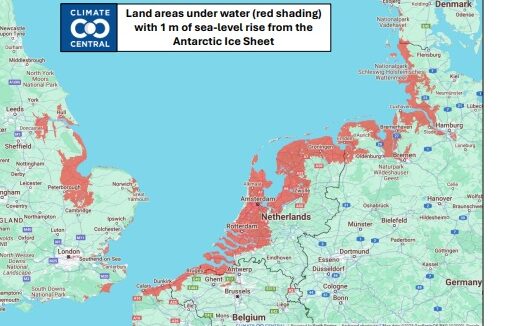
The Netherlands is one of the countries exposed to a global threat of “catastrophic inland migration” due to sea level rise, if global temperatures rise by just 1.5C, according to the authors of a new study.
Prof Chris Stokes, lead author of the study published last week in Nature Communications Earth & Environment journal, told Dutch News that the Netherlands was one of a number of “low-level states” at risk.
The paper examines global mean sea level rise as ice sheets in Greenland and Antarctica melt and – although it does not look specifically at the impact on different regions– he said the issue is urgent.
“There is a really good tool to help people map sea level rise scenarios and I often produce maps…to try and get the urgency across to the public [and] policymakers,” he told Dutch News.
In the event of a sea level rise of one metre, half of the Netherlands would be under water without further measures, according to these scenario maps. Poorer countries such as Bangladesh are even more at risk, another author of the study Prof Jonathan Bamber told The Guardian.
Even though the Dutch have significant measures to combat sea level rise, after two catastrophic floods in living memory, the country is also exposed to flooding from rivers that run from the rest of Europe, increasingly heavy periods of rainfall, creeping salination up rivers from the sea and freshwater shortages.
One in eight houses are expected to need repairs to combat subsidence caused by lower water tables and periods of drought. These climate-change related risks are currently not priced in to “overvalued” Dutch housing, the DNB central bank and AFM financial authority warned last week.
We could not provide the Dutch News service, and keep it free of charge, without the generous support of our readers. Your donations allow us to report on issues you tell us matter, and provide you with a summary of the most important Dutch news each day.